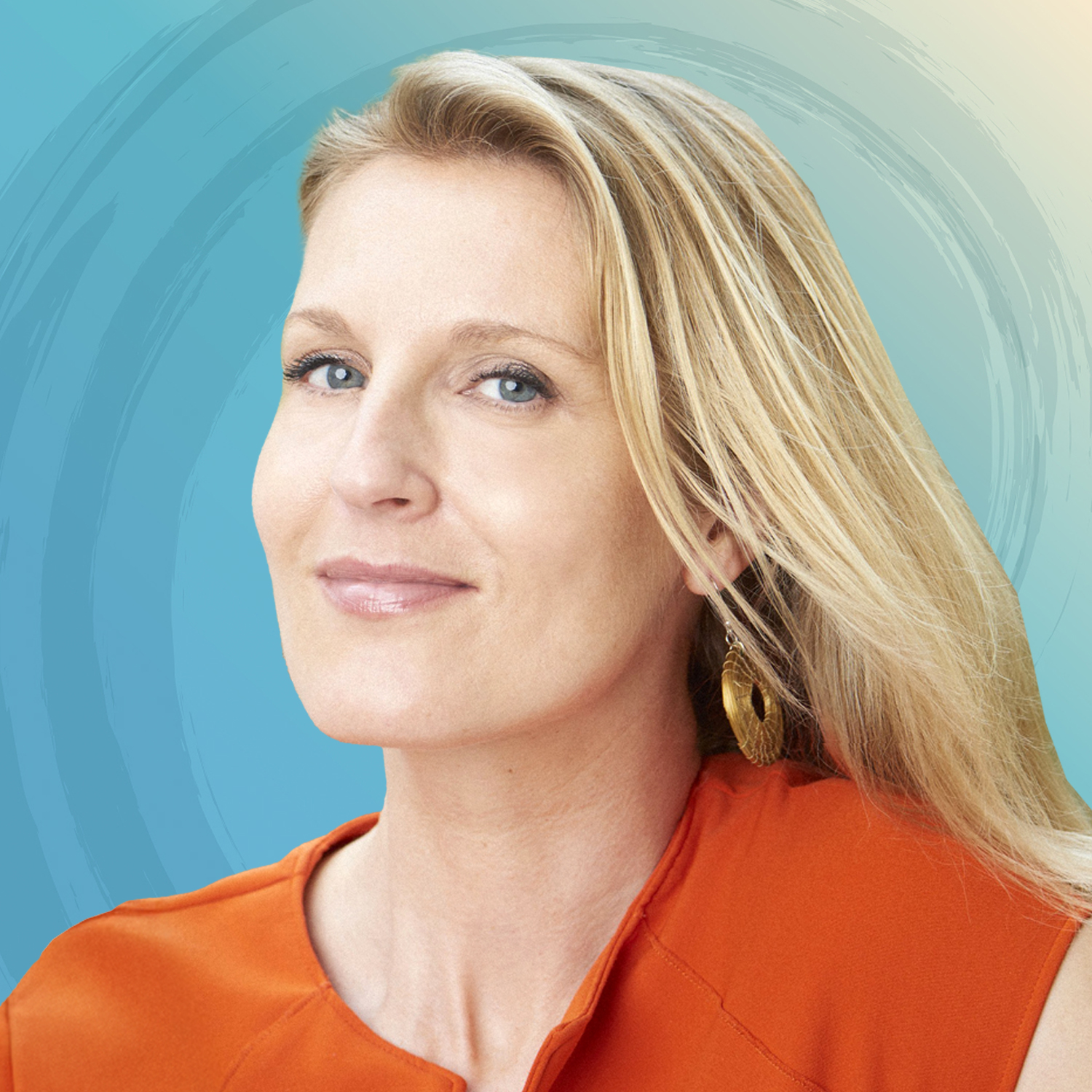
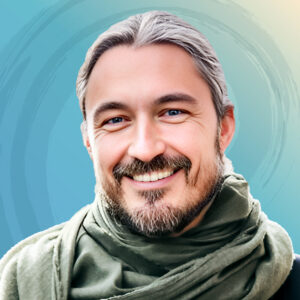
Thomas Hübl: My name is Thomas Hübl and I am very delighted to be sitting here with Amandine Roche. Very warm. Welcome to our summit here.
Amandine Roche: Thank you very much, Thomas. It’s a real honor to be part of your summit.
Thomas: Yes, it’s the World Women’s Summit and I’m very passionate about women’s empowerment. I think you are very passionate about it. I’m very passionate about healing trauma and collective trauma and I think there’s a lot of collective trauma in the world around masculine, feminine power, power, abuse. And I think the healing of that is very, very important so that we can move into new ways of living together. I know you did a lot of human rights work, you did a lot of work all around the world. But before we dive into this, I’m always curious, I think when we develop a body of work, there’s always some leading edge. I’m curious what keeps you excited nowadays? I know I always have some new things that I’m developing and that I’m really excited about and I’m curious, what is that for you when you say that the coolest thing ever at the moment for you is…
Amandine: And I’ll tell you what really excites me today is to become a woman. I never wanted to be a woman, to tell you the truth, Thomas, I was very aware since very young age that being a woman on earth, it’s tough, it’s hell. And I do all what I can do to press my femininity and develop my masculinity within myself because it was my way to survive in this world. But what excites me the most right now is finally to embrace my femininity and to be a woman and a proud woman on earth.
Thomas: That’s very beautiful. That’s very beautiful. When you said, let’s say it’s very beautiful to hear that now and it makes me also sad to hear that you had a long time, the experience that it’s hell to be a woman on earth. And maybe you can, let’s speak a little bit about this, trying to be masculine in this world and what is actually maybe even your own way to embrace female leadership on your own path so far. And maybe you can speak a little bit to that. What is adapting kind of a masculine form of leadership and what helped you to discover your own authentic leadership?
Amandine: Yes, thank you. Your question is very profound for me because I’m just becoming aware why I’ve been representing so much my femininity and developing so much my masculine quality in order to survive on this planet and to work for more than 20 years on leadership of women in conflict countries. And I realized there is two reasons, my mom is Polish refugee to France and she was a human right activist for Amnesty International. So since at a young age, I was the one writing letter to prisoner in jail going to all the conference, manifestation, demonstration for human rights. So she make me aware that I’m very lucky to be born in a human rights country, the cradle of human rights France. And second, I remember when I was seven, I came back home furious and I went to my bedroom and I put a clip on my vagina, and I said, from now on I will never be a woman because it’s hell, it’s suffering.
Amandine: I rather be a man. And I cut my hair, start to dress as a man. And until recently, because the healing happened and when I went on healing, I discovered that I was abused by my teacher. And I realized that I’ve been working for United Nation, European Commission all around the world, in Afghanistan, in Congo, in Haiti, in Central Africa, in Angola, you name it, at the bottom of the bottom of the fossilized patriarchy in order to wake up all my sister and to work on healing the sexual abuse and to give them back the power of leadership in order to take seat of ministries or doing electoral campaign to become minister or senator or deputies in Afghanistan on civic education. But I realize only now after such a long healing journey that the person I wanted to save was myself.
Amandine: And this trauma that happened to me at seven years old was my engine. What was the reason that lead me to this path of woman empowerment, of healing all the women on this planet because this planet have been abused, exploited, and raped by men from century as much as the woman on this planet have been abused, rape and exploited by men. And as much as I have been abused, exploited and raped by men without knowing it, but it’s coming to my consciousness now and more, I was healing the woman more. I was healing the planet, but more I was healing myself. So it’s full cycle.
Thomas: Yeah, that’s amazing because you described also how, first of all, how we sometimes try to heal ourselves by healing the world, but on the other hand how healing the world can also be a way to heal ourselves or healing ourselves contributes to healing the world so that whatever is the hardship that we carry can be turned into a blessing. And you said that beautifully. You said that by doing the work that you did, and maybe you can speak a little bit about the work that you did in the crisis areas and also how you felt and because when you meet a lot of pain and the after effects of abuse, I mean then you also, there’s a lot of activists are being affected by a secondary trauma and I’m wondering how you dealt with it. How did you keep your life energy high, your spirit high? How did you not get depleted or did you get depleted by it? So maybe you can speak a little bit for everybody that does this kind of work in the world. How was your journey?
Amandine: So it all started at the age of 18. I decided to become a human right lawyer because his holiness Dalai Lama came to my university to speak about the violation of human rights in Tibet and the non-violence resistance of a Tibetan. And so when I listened to his speech, I say, this is exactly what I want to do, bring back the Dalai Lama to Tibet and become a human right lawyer for a United Nation. But I was very naive at this time because of course there is a bit of a Chinese, but at least he gave me a direction, a focus in my studies, which is good because I went to Dharamshala, interviewed the Dalai Lama, wrote my political science thesis on the violation of human rights in Tibet, and I was very focused. So by the age of 24, I joined United Nation after a master degree in internationalization.
Amandine: I was on fire, I just wanted the human rights all around the world. And my first internship started in Tajikistan and in Tajikistan it was in 2000. And at this time, all the Afghan were fleeing to Tajikistan to flee the Taliban regime. And when I meet them, I fell in love with them because I saw how much they was resilient, courageous, and despite the turmoil, despite the conflict. So I decided to go to Afghanistan and by chance I end up in Afghanistan on September 11th, 2001, invited by the Taliban as a honor guest because when I applied for Ibiza, they say you were sent by hallah. Your name is means the happy protector of peace. Aman means peace, Dine means religion. Roche means joy. So in Afghanistan, my name as a meaning means the happy protector of peace, Amandine, and say, how bizarre because I’m drawn to work for peace and say you are at the right place.
Amandine: Indeed, there is so much work to do on human rights and women empowerment. So I joined United Nation and I become the head of civic education, head of civic education where you have to explain to the population what is human right, what is a constitution, a government, a parliament, and to door to door campaign to explain to the woman, get out, it’s over. The Taliban regime is over, you can take the lead. So we hire one or 20 civic educators, half women, half men, woman, medical doctor, engineer, teacher. And they were promoting democracy in Afghanistan. So I did it for almost two years. But to answer your question, when I came back home, I was on PTSD, post-traumatic stress disorder, depression, anxiety. Why? Because we work so much for democratization, human right peace. We were on desperate every single day by Taliban, my colleague Abed kidnapped in front of my office.
Amandine: And we actually saw a colleague on Al Jazeera TV with a Kalashnikov on the head, please release us so much trauma, you don’t have any idea. And I start to develop a stomach cancer without knowing it, my belly was like four months pregnant. Everybody congratulate me. I said, I’m not pregnant. I said, what’s wrong with you? Well, I don’t know. And I did a biopsy and I developed cancer cell metastasis. So instead to going to chemotherapy, I went on a Veda healing and the healers say, I’m so sorry, you just cannot go back to Afghanistan. Why? Because you are nom passe and you have been a vacuum cleaner of Afghanistan. I can see there is bombing, there is assassination, there is desperate, there is a border of cannon and your body have been a sponge for two years and now you are completely destroyed.
Amandine: Completely lost. And I say, but I love so much Afghanistan. I want to finish my work on woman empowerment. He say, you cannot go back until you know how to protect yourself. And I say, okay, but how do I do that? He say that very simple. It’s called technique in Buddhism is when you heal, but you exhale, you don’t keep everything from yourself because otherwise you cannot digest it anymore. And that’s the reason why your body is creating a stomach cancer because you didn’t deal digest all this emotion. You’ve been so far two years. And I say, okay, so maybe it’s time for me to go back to Dharamshala and learn meditation with his holiness, which I did. And so I did vipasana meditation with Goenka, I become a yoga meditation teacher. And finally when I was finally back on track back to myself line again, no more cancer, I went back to Afghanistan and I went back to Afghanistan.
Amandine: And same craziness my colleague got assassinated, against so much there’s threat, but I become center, no more PTSD because of my spiritual practice. So my colleagues say, you change, you don’t freak out anymore. I say, because I’m grounded, I have all this practice. And they say, could you teach us? And so I started to teach yoga meditation to my UN colleague. I started to teach to the Afghan and more, was teaching to the Afghan more. I discover that they all suffer of PTSD for 25 years of war. And I say, wait a minute, maybe there is something to explore here. And I went to visit the minister of Health. He said, go for it. We have only two psychiatric asylum in Afghanistan. And when they are PTSD, they believe they’re possessed by the evil and they send them to a tree and give them some water with paper to get rid of a bad Djinn,
Amandine: The bad evil, can you believe it? So that’s the way of mental health at this time in Afghanistan. So you say if you feel that yoga meditation can help the PTSD, go for it. So I create a foundation where we were teaching yoga meditation in jail to women’s shelter. We create a school for the kids to learn the technique. I also teach that to a Taliban commander, actually one of them wanted to become a peaceful leader after being the right hand of Bin Laden. And he say, my daughter, I’ve been bullying in school and I don’t want to have a bad image of me. I want to preach peace and be a peaceful leader. So I went to his house teaching to him and his kids meditation and he say, well, it’s like doing a prayer and connected with a lifetime at this. So he say, I’m doing meditation without being aware.
Amandine: I’m doing meditation. I’m showing you all of this because I realize it’s good to join United Nation. It’s good to want to work for peace in the world, but if you don’t put peace within yourself, you are a fraud. And that’s my mission honestly, because I saw so much person joining United Nations for a bad reason for power title money, but they don’t give a shit about peace. And I believe that it’s an honor to join such an organization and you need to also be aligned and be an apostle of peace as Gandhi, as Abdul Fahan. So I become aware. Also, I wanted to say in our school we create the torch of light school with a friend of mine, Afghan friend of mine called Hala. And in this school I was teaching yoga meditation. But one day one of the Taliban father came and with a Kalashnikov looking for Amandine and how Hala said, you don’t show up to school today because he wants to kill you.
Amandine: And I say, what’s wrong? Well, he learned that you were teaching that and he say that you are teaching Hinduism and Buddhism to his daughter because he made a shortcut, which is in his mind, Buddhism yoga meditation is coming from India, which is Hinduism and Buddhism. And I make some research online and it’s not proselytism because I discover that you guys coming from Pakistan and meditation is coming from Afghanistan. So you see I just bringing what belongs to Afghanistan to his country. But because of that I needed to stop teaching yoga meditation. And I were elected to Ban Ki-moon, my big boss at this time. And I say, are you aware of the sanity at the mental health of your staff on the frontline? Because this is my story, evacuated four times from Afghanistan, having a stomach cancer, dealing with so much depression, anxiety, PTSD for years and going on therapy.
Amandine: But that’s only my story. What about my colleague Shepe who have been kidnapped? What about my colleague Aita who have been on death threat and this one in a bombing and this one they’re not. Okay, so could you tell me what you do for mental health? Because if you don’t have any idea, I can give you some idea. And to my surprise, it replied to me certain minutes after my email, come to my office right now. So I went to his office to meet his cabinet and they told me Thank you. We are very aware of a situation we don’t know what to do. We receive resignation letter every single day, insult letter, every single day we have to address the mental health situation or the UN stuff. And I say, you know what? If only I will have known before, what does it mean to join the United Nation and work on the front line?
I will have never signed because I destroyed my brain. I mean it took me ages to come back to myself. And if only I would have received some tools to deal with emotional regulation, I would have known better how to deal with stress and death, threat and bomb being assassination, kidnapping, okay, I’m kind of adrenaline junky so I feel high, but when I come back home, I collapse and it’s time for me to learn. And through my life I learned so many techniques. I also learn at Google Institute, search inside yourself. I receive a scholarship in San Francisco where we learn unconscious leadership, mindfulness, neuroscience, emotional intelligence. So I gained a lot of tool. So you say, okay, you do whatever you want. And I say, okay, I want to create the inner peacekeeping program. We work for peacekeeping, but we need also to learn what is inner peace. He said go for it.
So I fundraised some money, hire a team, and we designed this two days curriculum. We went to Jordan refugee camp in Marac, went to the UN staff working on the front line, welcoming all the Syrian refugees. And we started to teach them the technique and we gave them also a app where for six months they have to put into practice all the tool of mindfulness, breathing, exercise, journaling, gratitude, I mean all of them. I’m not going to teach you. And after six months result, better sleep, better eat, more calmness in the mind, a lot of them resign because they realize it’s not good conditions, they don’t respect themselves. And afterward, I’m very proud because this program have been adopted by United Nations and is teach all around the world. So yeah, so that’s in a nutshell the way and I create Inner Peace Corps afterward in refugee camp in Jordan, where I wanted to develop these tools to the woman refugees, healing the inner invisible world of trauma and restore dignity and creating joy through creativity. So that’s what I’ve been doing.
Thomas: Wow, what a journey. Thank you. This is great. First of all, I love to listen to all the amazing things that you did and experienced. And I also hear, because I believe if we really go through something and we resolve it, which you did, we become kind of a remedy for that very thing. And when I listen to you, I can feel that you went through something, you changed it and you changed your way. And for me, it’s very clear I’m working with collective trauma in almost 25 years. It’s very clear that there is no, here is somebody, an aid worker or a peace worker or whoever it is, somebody that does conflict resolution. And here’s the conflict. It’s always an interdependent field. And if you don’t know how to regulate ourselves, of course it’ll constantly impact us in a hurtful way. And so this movement towards much more awareness of our own mental health, the secondary trauma transmission to people who work in a lot of heavily traumatized environments, I think it must be key.
This must be the standard of work, not just an add on because somebody went through developed a health crisis. And I mean that’s great for you and I think it’s that you did it. And it’s also a question mark, why we don’t have that standard in the first place. The denial of our inner world in outer activism work or outer aid work is puzzling. I mean I think it’s a symptom of something. And I think we should look at why is it at all that people work under these conditions and why do we still deny the impact on our inner world? And I think it’s great that you brought something new and I think we should also ask the question, why is it not clear that that must be the standard to take care of the sustainability of the work?
Exactly. And Thomas, I wanted to add something. I have a great admiration for Dag Hammarskjöld who was peace Nobel laureate, and he is the second UN secretary from Sweden. Nobody talk about him, but he was the one saying to the UN staff, in order to be efficient on your work, you have to find stillness within yourself. And he also developed the meditation room at United Nation. Can you believe it? And now when you go to United Nation headquarter New York, you go and it’s just like a touristic site. This is where the meditation, I’ve been created room, there’s nobody inside. I said, how is it possible? Let’s wake up the legacy of Dag Hammarskjöld like in Afghanistan. I wake up the legacy of Abdul Ghaffar Khan. Nobody knows about Abdul Ghaffar Khan. Abdul Ghaffar Khan was the frontier. Gandhi, Abdul Ghaffar Khan was the nonviolent soldier of Islam.
Abdul Ghaffar Khan was the best friend of Gandhi. Abdul Ghaffar Khan raised an army of 500,000 nonviolent soldier of Islam. [Inaudible], the power of truth. When you read at the biography of Gandhi, a journalist ask Gandhi, who is your model, role model and respond, my friend Abdul Ghaffar Khan, because he’s the one in the midst of a conflict on the turmoil of the chaos who became peaceful and go super war with a peaceful army of saying, no, we don’t have any weapons. And I also, I remember he received actually a war of Amnesty International in 1981, but during his funerals, I guess it was ’88 during Mujahadin war, do you believe it? In Jalalabad at the border of Pakistan, it was Abdul Ghaffar Khan and funerals and all the stopped fighting on his funerals. Can you believe it? And went to the funerals. So I believe that aha is the answer.
I believe that the way you work on the healing yourself, raising your vibration, that’s your contribution to peace. So you asked me at the beginning where I am, I’m currently in Spain, Majorca, where I realize I don’t need to save all the women on this planet because I was the one needed to be saved. And now my contribution to the work, it’s only the work I’m doing to myself more, I’m in alignment with my soul more. I’m raising my frequency more. I’m helping Gaia to raise a frequency as well. So we have a smaller healing center here and where we organize a concert ceremony retreat, but it’s local, no international anymore. Because I believe if every single person on this planet do a work on myself, there will be peace and harmony non-violence definitely because they will form themselves. They will form the connection with Gaia. Gaia is crying right now. And how do we help? We help by healing ourself. That’s very simple for me. It makes sense.
Thomas: Yeah. And first of all, that’s beautiful. I was in October in Majorca. So had I known that that I maybe fine,
I could have stopped by next by I’ll come again. But I think first of all, I want to underline what you just said, that how important it is to heal ourselves and not try to heal ourselves through trying to heal the world and then maybe our own healing adds to the way we work and the world. But I want to say through my research on collective trauma, I even think that the fact that we see ourselves as separate particles coming into an ecosystem that is different like you coming to Afghanistan. But I think in the moment you are coming to Afghanistan, you are in an interdependent relationship with that ecosystem. You’re not anymore just a separate particle going there. And I think that separation is already part of the trauma field we have been born in because the world has been traumatized for thousands and thousands of years.
So these fractures and fragmentations became so normal. And I think if we were to include some of the things that you just said, that you surface symptoms through your own body, which is not separate from Afghanistan, your body becomes part of the, is the ecosystem in that moment and what comes up, the information that shows up in you is inherently interwoven the information, as you said, Gaia like Mother earth, we are all mother earth. There is no mother earth elsewhere. We are all it. And so this separation that makes us think in this mechanistic terms is not conducive to the healing and to the peace work in those ecosystems, it would be much more efficient, much more powerful had we adapted already this knowledge in the way all over the world, people are working in those crisis areas. So that’s why I find your life story so amazing because you shared all of that through your own. You came to that through your own experience. But I think there’s a very, very important principle in your life journey that is very crucial to any kind of aid work in the world. It’s like a principle that you shared with us.
Amandine: Yes, exactly. I remember I met this saint, Ama, in India and one day she say, you are not separate from Gaia. Gaia is like the body and you are just hair. So when you are putting up the hair, it’s painful for the earth. So like a small hair here. And so we are all in interconnection of course. And I realize talking to you, Thomas, but indeed my life, I’ve been the right of passage. I realized I needed to go through all this pain and suffering and raping and humiliation and sexual abuse or harassment in order to be in compassion, in order to be in connection with all the women on this planet. And I’ve been through this rite of passage to find the tool and to apply the tool within myself to show to all this woman, there is an exit at this tunnel. And yes, there is light at the end.
And yes you’re right, healing ourself, but what does it mean to heal ourself? To heal ourself is to find harmony within. How do we find harmony within is exactly the yin and the yang. If you have a masculine overdevelop, as I was, as the birds of humanity of humankind in the [inaudible] prophecy where they say there is this bird of humankind and the right wing is overdeveloped with the left wing, the right wing is a masculine, the left wing is a feminine and if the birds of humanity just fly on one wing is going cycle and create chaos and conflict. So you need to develop a little bit more of feminine wings in order for the birds of humanity to thrive and to be in harmony, in balance. So to heal our self, for me it’s very clear you need to have a right balance of your feminine and your masculine, which is a divine masculine and the divine feminine in order to have a sacred union and to be an apostle of peace.
So that’s the inner recipe. So to look within yourself, what is too much developed on the masculine and underdeveloped on all the way around for my case was too much masculine and for me being feminine, equal being weak and I needed to survive. So I have to be courageous. I have to be in determination, deadline, putting so much rest on myself, which now I’m finally said no, I’m a woman and just need to be back to my feminine. You see? So I believe if everybody do this work finding within cell cell what is overdeveloped, underdeveloped put within themselves, harmony. They will strive more in their life.
Thomas: Exactly. And I think also that what you said beautifully is that everybody has their own composition of what feels authentic and true. There is a kind of certain percentage mixed together in all of us. And I think the journey that the self-exploration journey that you are referring to is really to find out what’s the authentic composition. For me that feels in balance. It’s not like copying you is the right thing or copying somebody else. It’s like I need to find out with certain tools that you may be also used throughout your journey. How do I find my own inner balance? And that’s my authentic voice of the masculine and the feminine balance. And I like also there’s the left wing and the right wing of the bird, but I also like there’s an upward movement and there’s a downward movement of both. And I think that that’s also beautiful.
So what I think we can look at what’s our authentic movement in this? And some people they are naturally more inclined to have more masculine traits, but they’re authentic for them and some people are more feminine and how do we find our authentic voice? So I think that’s good and I would love to hear about that. And the other part is if you want to share more about that question, how we find our authentic self in there and how we get synchronized with it. And the other one I would also love to see, hear a little bit because when I look into the skills of our collectives, our societies to be active and to be out in a way and do new things or do stuff that is pretty developed. But what I don’t see, for example, and I’ll just give one example, and I think that applies to crisis areas in a different way, but also to many areas around the world.
After COVID, I think we went through a collective crisis that had of course positive outcomes and had a lot of painful outcomes. But I’ve not seen a lot of spaces that we created to say, okay, we went through a global disruption. Why don’t we slow down for a moment and say, how do we digest? Same as you couldn’t digest Afghanistan and that created a congestion in your system. I think collectively we are really not good at digesting, creating ritual, creating spaces, creating environments where we can digest a massive impact of all kinds of events. And that’s wars. We don’t do this with wars, we repeat them. We don’t do this with global crisis, so we’ll repeat them. And so to create learning spaces, and I think that also has a lot of feminine wisdom and we need to come together to digest a certain impact.
Otherwise we don’t learn. We don’t integrate events and learn. And that’s what you did when you went to your Aveda treatments and to your meditation. You had time to integrate. So maybe you can speak to these two, how do I find my special composition of the masculine feminine? What might be helpful tools to do that? And what can we do on the collective side because I really think we are lacking collective skills to integrate thing. And if not, then we will just repeat certain patterns in. And then people say history repeats. Yeah, it has a reason why history repeats because we don’t take care of history, so we’re unconsciously repeating it all the time. So maybe you can speak a bit to that. Two questions.
Amandine: That’s good question. Thank you for asking Thomas. I realize my life actually I’ve been action, reflection, meditation, action, reflection, meditation. I cannot be only on action, action, action, action or only reflection. Reflection. Like writing book because I wrote book and meditation, meditation being in a cave of my life. No, it is exactly the written, the masculine action in the middle, reflection, meditation, more feminine. And it’s like developing my masculine, developing my funny and finding the right balance in what’s written, it’s like a dance and you need to do a Tongo, but just like, okay, I’m missing a little bit. For instance, right now, I’ve been here for my husband for the last three years. I’m more like on reflection meditation and I feel, oh, now I’m time to go back to action. You see, finally after three years of deep healing and meditation and reflection about my life, so I like to question why because there is not a single month when I don’t receive a letter from a student saying that they are studying political science, human right, international religion, they want to have my career, my path and join United Nation.
So at the beginning I was just coaching them, monitoring them, saying that’s the way to join United Nation. You do this, this, and anyway, but now I change and tell them why you want to join the United Nation because I want to work for peace. I want to have an impact. But clearly you really want to work for peace. Yes. Okay, so work on yourself and say, what do you mean when you mean I study for six years at university? And yes, but the best way you will contribute to peace to this world is to be at peace with yourself. Did you solve your trauma from family in age or did you work on a system belief that sabotage you? Do you, you know what I mean? It’s a lot of work. You did all for the external, which is good, but I’m sorry to say, are you fully aligned and an apostle of peace?
Look within yourself if there’s inner conflict with your family or whatever. And so they’re kind of surprised. But after they wrote me back said, well, thank you. I started meditation, I started EFT tapping or whatever, and I say okay like that because I want to ensure that they don’t go through what I’ve been through because I joined the United Nation while sent to all the folk line because when you are working for this type of institution after you just belongs to the conflict person. So I never go to Geneva in New York after it’s central Africa for one year and after it’s Haiti or Sudan. And so I’ve been on the darkest, darkest place on this planet to unlock the feminine power at the bottom of the the pyramid, which is great, but it’s very exhausting at the end. So I believe you’re right. What is missing more than ever right now is a counterbalance because there is so many institution working for “outer peace.”
But we’re the institution for working for the inner and the healing. It should be as developed as all this organization around the world. United Nation is like 165 countries. We need as many organization working on the inner. And I do believe, honestly, looking at the world right now, we are going in such crisis obviously, but at the end of this channel would be more locally like you grow your vegetable in your garden and that’s the way peace will look like. I believe. Not trying to bring, because honestly if you look at Afghanistan, because I spent 14 years on and off in Afghanistan from 2000 to 2014, 20, 20 14, working on peace, democracy, human right? Look at the situation right now. I feel stuck in my back. When the Taliban took back the power on August 25th, 2021, I felt so depressed like a betrayal. And I felt like I lost 14 years of my life, honestly, because we are backward.
We went backward back to exactly where we started in 2000. So I realized, okay, you can put all your energy trying to change the world, bring peace to the world, but the only way to change the world is to change yourself and it’s full cycle. So that’s why you are right. I do believe right now to counterbalance all this EU, USAID, even USAID maybe doesn’t exist anymore. USAID, EU, it’s okay. And which type of, I’m thinking of Omega Institute, SLN, all this place always is of healing on earth. Where are they? We need more of that to counterbalance with masculine, more feminine and yeah, I feel it would be better. I believe so.
Thomas: Yeah. And it shows also you’re speaking to that you chose also that the unconscious dimension of our past pain is exactly what we are not looking at because we could also ask why does a university program that prepares people for international relations or international peace building not look at these things? We know too much about trauma, about collective trauma. This would be the thing that should be parallel to such studies to prepare yourself inside, to give you skills to be able to work in those places. And not just intellectual skills like holistic skills. And so the question is always okay, it doesn’t exist and it needs voices like yourself that are promoting that. But I think the other question to ask also is if something is not there, there’s a reason why it’s not there. And I think we always need to ask the question, why is it not there to start with if that’s so good.
I mean it helped you and it helps many other people. And this, I know this, I have seen thousands of people that flourish much more if they’re inner skills and healing methodologies and we become more wholesome. So we all know this and there’s a lot of science data around it, so we know that. But still it seems like we argue with some invisible force that’s not there. Otherwise we would have that education in many university programs that would be already integrated and in the UN it would be integrated because we know that’s a way to make people have much more efficient impact, be much more sustainable, be much more happy, be much more able to deal with the trauma impact. I mean there are so many good reasons. So the question is I think also to ask why is it not there? Maybe you want to respond to that and then I see our time and maybe we can just slowly wind down and if you have anything else besides that question that you think we didn’t talk about and you want to share, so please do that.
Amandine: Yeah. When you read Montessori, when you read Rudolf Steiner or Waldorf, you see back to the last centuries, they were also already speaking about that why we don’t develop peace education in school. What we don’t develop the inner skill. And I believe the only reason is to because they can control us less if everybody is on power with the inner skill and they know who they are and they know their mission and they know where they go and you are out of matrix kind of. And of course the go government doesn’t want that. They don’t want to set you free.
Thomas: And I think we collectively also share an unconscious dimension of the pain we never wanted to look at. I mean of the wars, look at the second World war, look at the Holocaust, look at racism and slavery in the US or colonialism. I mean there are so many big topics around the world I think that we do not consciously address. And I think the feminine power and also the skills of healing are so important if they balance activity and outgoing and innovation and tech development. But we need to develop that capacity that you are speaking to the whole time throughout this conversation because I think it’s so easy to keep avoiding what we don’t want to look at and then recreate similar situations. Oh wow. Now the world’s really in a crisis. Of course it will be. Because I often compare this to, it’s like you’re on your surfboard and you’re pedaling in the ocean and then you say, this is my personal freedom.
I can go left or right. And then you see, you don’t notice at the beginning that a big, big wave takes you and you’re pedaling still, but you’re part of a bigger movement that is totally unconscious. And then we say, oh, well how come that there’s another war? Or how come that in different countries we have such a regression again? And I say, yeah, of course we are not taking care of the things that we need to take care of. So I think that’s a great conversation also to keep going. And is there anything else that, any wisdom you want to leave our listeners with?
Amandine: Yeah, well you say the world is on fire. And I always like this story of indeed the world is on fire and what do we do to extinguish this fire? And I remember this nice story, or it’s in the jungle. There is a fire in the planet right now in Los Angeles recently. And so all the animals are fleeing this fire, and they look at the fire and they see the hummingbird going to the lake, take a drop of water flying above the fire, dropping, going back to the lake, take a drop of water. And so the owner or their animals, like the bee fellow or the big animals or the elephant, the lion are looking at the hummingbird and say, well, you think you’re going to extinguish a fire like that? And you reply, at least I do my part. You see if all of you will do your part, yes, we will all together extinguish a fire.
Thomas: Wow. That’s a beautiful note to end on. Yeah, that’s lovely for all of us to take in. And so thank you very much. I deeply enjoyed this conversation. It was very alive and it was so great to get to know you through this conversation deeper. So thank you very much. I think that’s a great conversation for people to take to their life-
Amandine: Bring to the world as well because I’ve been following you and you are for me an apostle of peace because of all the work on trauma you did on yourself and for the collective. So thank you.
Thomas: Thank you so much. Thank you so much. Well, this was great. It was such a lovely conversation. You see, it just flowed and it’s really.